
Decisions to Prepare for When Designing a Headstone or Monument
Designing a headstone or monument is so much more than choosing a piece of granite. It's an incredibly emotional and deeply personal decision. It's an opportunity to create something permanent that honors an entire lifetime of love, memories, laughter, and the countless little things that made someone so special. Somehow, you're trying to capture a piece of someone who meant the world to you and preserve their memory in something that will remain long after we're gone.
For many of the families we meet with, this is a decision they never imagined they would have to make. They've certainly never thought about granite colors, monument shapes, or what words should be written on a headstone. And suddenly, they're faced with these decisions while still trying to navigate the heartbreak of losing someone they love so much. We’ve been there. When you're grieving, even the smallest decisions can feel so overwhelming, especially when those decisions are meant to honor someone you would give anything to have back.
There is one thing we want every family to understand: You have time. As much time as you need. There is no reason to rush something that represents a lifetime of love. You should never feel pressured to make a decision, purchase a monument, or settle for a design that doesn't feel exactly right. Take the time to remember, to reflect, to change your mind, and to consider what would have made your loved one smile. Their life was uniquely theirs, and the memorial you create should be, too.
Franklin & Family was born from our own experience with loss, and we understand how deeply personal these decisions can be. We know what it feels like to want every detail to be just right, because the person you're honoring deserves nothing less. That understanding is at the heart of why we do what we do. Our hope is to make this part of an incredibly difficult journey a little bit easier, offering guidance, patience, and a genuine understanding of what these decisions mean to you and your family.
Because this isn't simply about choosing a headstone. It's about finding a way to tell the story of someone whose loss will be felt forever, but whose love and memory will never leave our hearts.
Before We Begin: Understanding Cemetery Requirements
Before we begin designing a monument together, it's important to understand the rules and requirements of the cemetery where it will be installed.
Every cemetery has its own requirements. These requirements will affect the size of your memorial, whether an upright monument is permitted, and whether features such as flower vases are allowed. Some provide a wide range of creative freedom and welcome unique and unusual monuments. Elmwood Cemetery here in Memphis is a great example, as on their website they state, “Large, unusual, and ornate monuments are encouraged at Elmwood Cemetery, but they must be approved by a vote of the Grounds Committee of the Board of Trustees and the Executive Director.” Others may restrict certain monument types, sizes, materials, or accessories. As an example, Memorial Garden style cemeteries are often restricted to flat/grass level granite markers or bronze memorials only.
At Franklin & Family, we help families navigate these requirements before finalizing a design. We take responsibility for the cemetery approval and permitting process (along with any fees) and ensure our designs are approved before any fabrication begins.
Monument Shape and Style
The first decision we’ll make together is choosing the general shape of the memorial. While near infinite variations exist, most traditional granite memorials fall into a few primary categories:
Upright Monuments: What most folks picture when they think “Headstone”. These are traditional standing headstones, usually made of two pieces: the upright stone, which we call the die, and the supporting base. They provide room for names, dates, artwork, etc.
Slant Monuments: These have an angled front face that slopes backward, with a generally vertical back. They offer the appearance of a smaller upright monument. Traditional slants include a projecting ledge along the front, while Western or full-face slants do not.
Bevel Markers: Sometimes these are called pillow markers, they are lower-profile stones that rest close to the ground. Their slightly sloped top typically rises about two inches from front to back, making the inscription easier to view. Bevel markers are the most commonly required shape in Catholic cemeteries in the South.
Flat or Grass Markers: Sometimes called flush markers, these are set level or almost level with the surrounding ground. They offer a simple appearance and are required in some cemetery sections. Flat markers are the most commonly required shape for memorial garden style cemeteries.
Beyond these more traditional categories, we also provide options for families to consider such as growing in popularity memorial benches, natural boulders, sculpted monuments, and cremation memorials such as single or multi-niche columbaria.
Monument Size
Once we’ve decided on a general style, the next decision is size.
Monuments are typically measured by their width, depth (thickness), and height. The size influences not only their overall appearance, but also how much room is available for lettering, artwork, and other elements such as emblems or symbols.
When deciding on size, we need to consider whether the memorial will honor one loved one or multiple.
Individual: Generally designed to commemorate one person.
Companion: Designed to commemorate two people, often spouses or partners, with room for both individual’s names and dates. Can be created as uprights, slants, bevels, or flat markers.
Family Memorials: Larger monuments or a designed arrangement of monuments designed to honor multiple family members in a single location.
We should also consider whether you’ll want to add inscriptions in the future. This decision is important especially when pre-planning or when creating a companion or family memorial. At Franklin & Family Memorial Company, we are able to offer onsite cemetery engraving and inscriptions, including death dates. We are extremely proud to be one of the only monument companies in the area to perform our own onsite cemetery engraving.
Granite Variety and Color
Granite is available in a much wider range of colors and natural patterns than most families realize. Some prefer traditional gray or black granite, while others choose blue, red, rose, brown, or other distinctive colors.
We steer all of the families we serve to our domestically sourced granite options whenever possible. While some color varieties such as certain reds and pinks (India) as well as some blue shades (Norwegian) are not quarried in North America and are extremely high quality stone, we believe domestically sourced granite is the leader in quality.
Popular varieties of stone include:
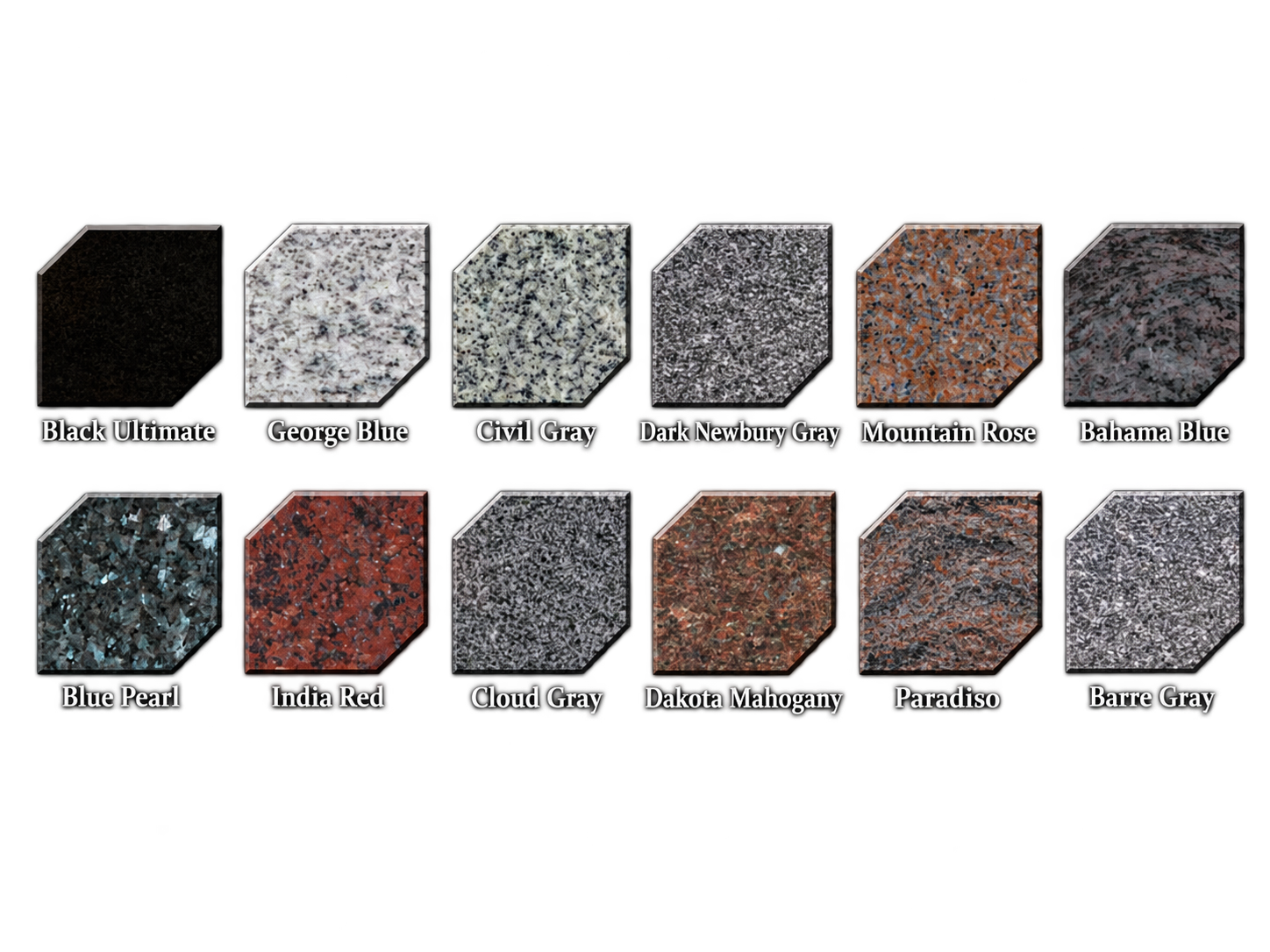
Black Ultimate: Deep black granite with a polished finish that works especially well for detailed engraving and portraits.
Georgia Blue: A traditional gray granite that can take on a subtle blue appearance in sunlight.
Barre Gray and Newbury Gray: Classic gray granite varieties with timeless appearances.
Blue Pearl and Bahama Blue: Distinctive stones featuring beautiful blue tones and natural patterns.
Mountain Rose and India Red: Warmer granite options featuring pink, rose, and red hues.
Dakota Mahogany: Rich earthy tones with shades of brown, red, and rose.
Paradiso: A highly varied granite featuring subtle purple and earthy tones.
Each granite has its own natural characteristics, and some varieties have more movement or variation in their grain than others. We have tile samples of our most popular granite varieties that we can provide you. Color can also heavily influence how lettering, etching, and other design elements appear against the stone.
We include our most popular granite varieties in the following link and below: Granite Colors & Finishes
Monument Shape and Top Design
Even after choosing an upright, slant, or another monument style, there are a few additional decisions regarding its overall shape.
For upright monuments, some of the most common shapes include:
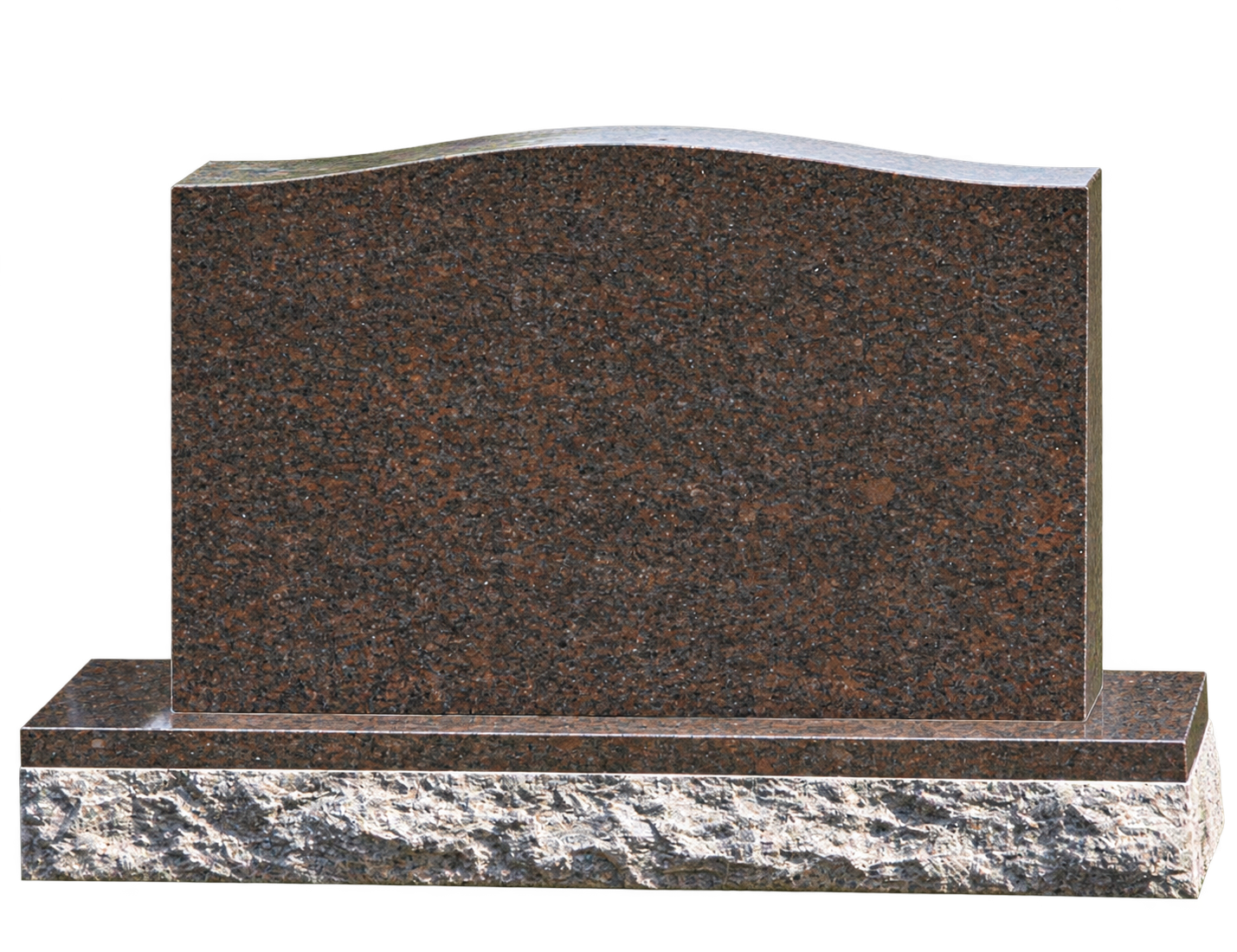
Serpentine Top (Serp Top): A traditional design with a gently curved top that rises toward the center. By far the most common upright monument shape.
Straight or Flat Top: A simple rectangular design with a straight upper edge.
Oval Top: A rounded, arch-shaped top with a softer appearance.
Roof or Gable Top: A peaked top that resembles the roofline of a house.
Gothic Top: A taller, pointed arch with a more traditional architectural appearance.
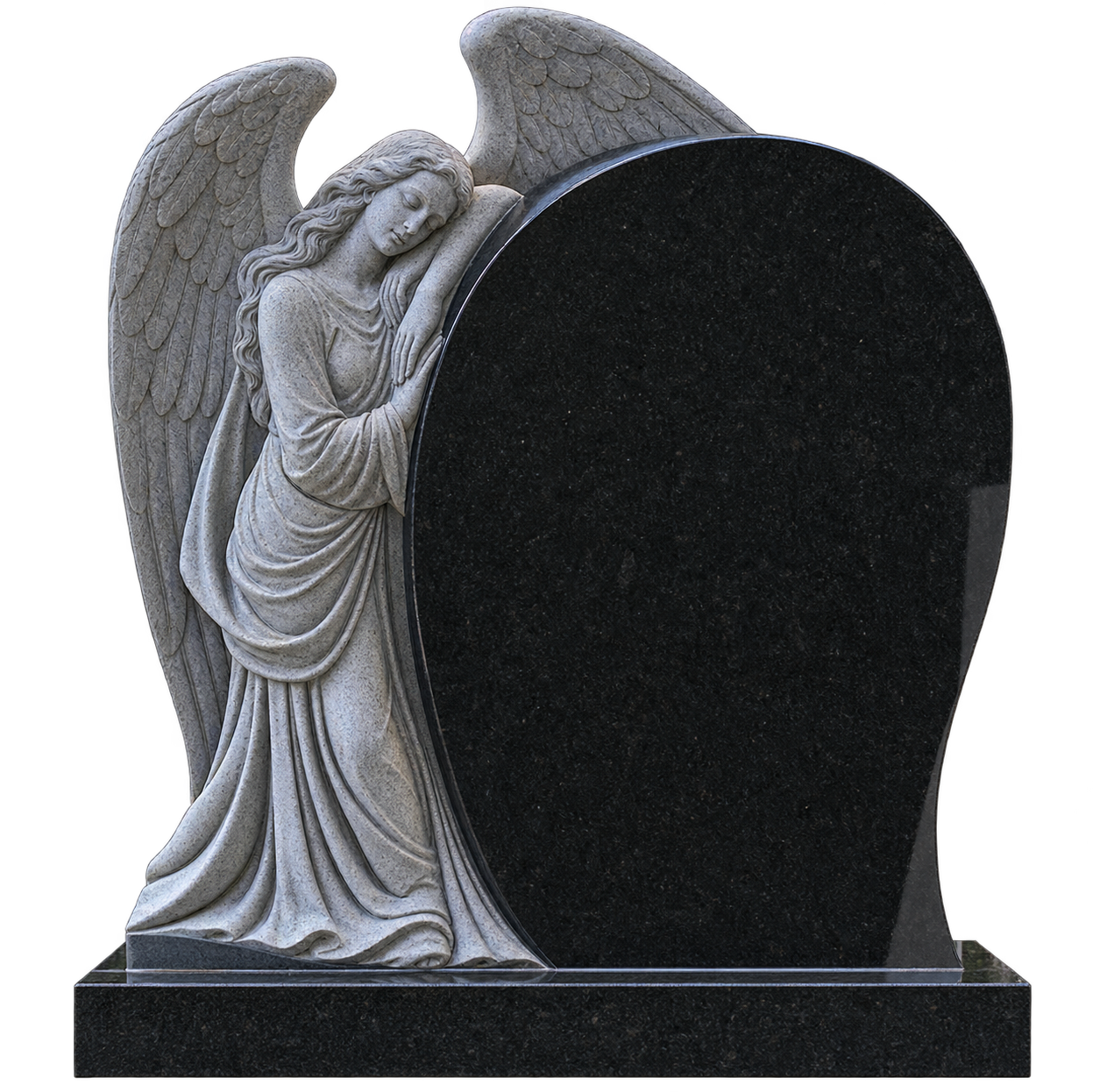
Custom Shapes: Hearts, crosses, books, angels, teardrops, and other specially designed shapes.
Within these styles, there are additional features we offer: corners may be rounded, edges tapered, or additional contours added to create a more creative appearance.
Below are two monument designs showcasing different top shapes. On the left is a traditional Serp Top shown on Coffee Pearl stone, while the design on the right is what we refer to as a sculpted monument featuring a carved angel shown on American Black stone.
Stone Finish, Base and Edge Design
The finish of a monument has a significant impact on its overall appearance. Granite can be finished in multiple ways, and it's pretty common to combine different finishes on a single memorial.
Polished: A smooth, glossy surface that brings out the natural color and patterns of the granite.
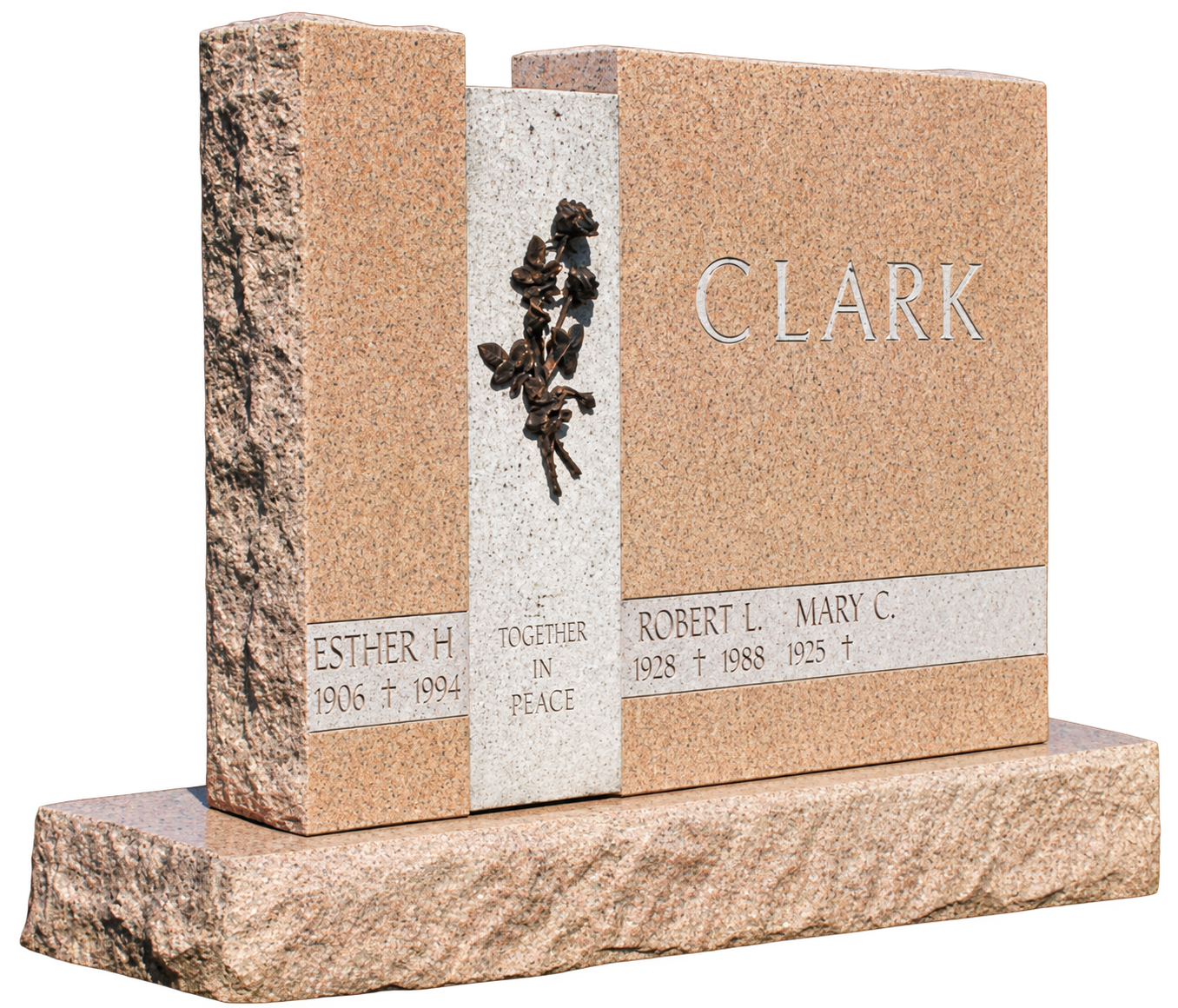
Rock Pitched: A rough, natural-looking surface created by carefully chipping the stone. Often used along the sides, edges, or bases of monuments.
Sawn: A flat, unpolished surface created during the cutting process. It may show light saw marks and is most commonly used on less-visible surfaces.
As an example, an upright monument might have a polished front and back, rock-pitched sides, and a polished top. Other design options include rounded corners, chamfered (beveled) edges, and decorative cuts or notches. Some monuments use multiple stacked bases to create a taller or more detailed appearance.
While these details may seem small individually, they can significantly change the character of a finished memorial.
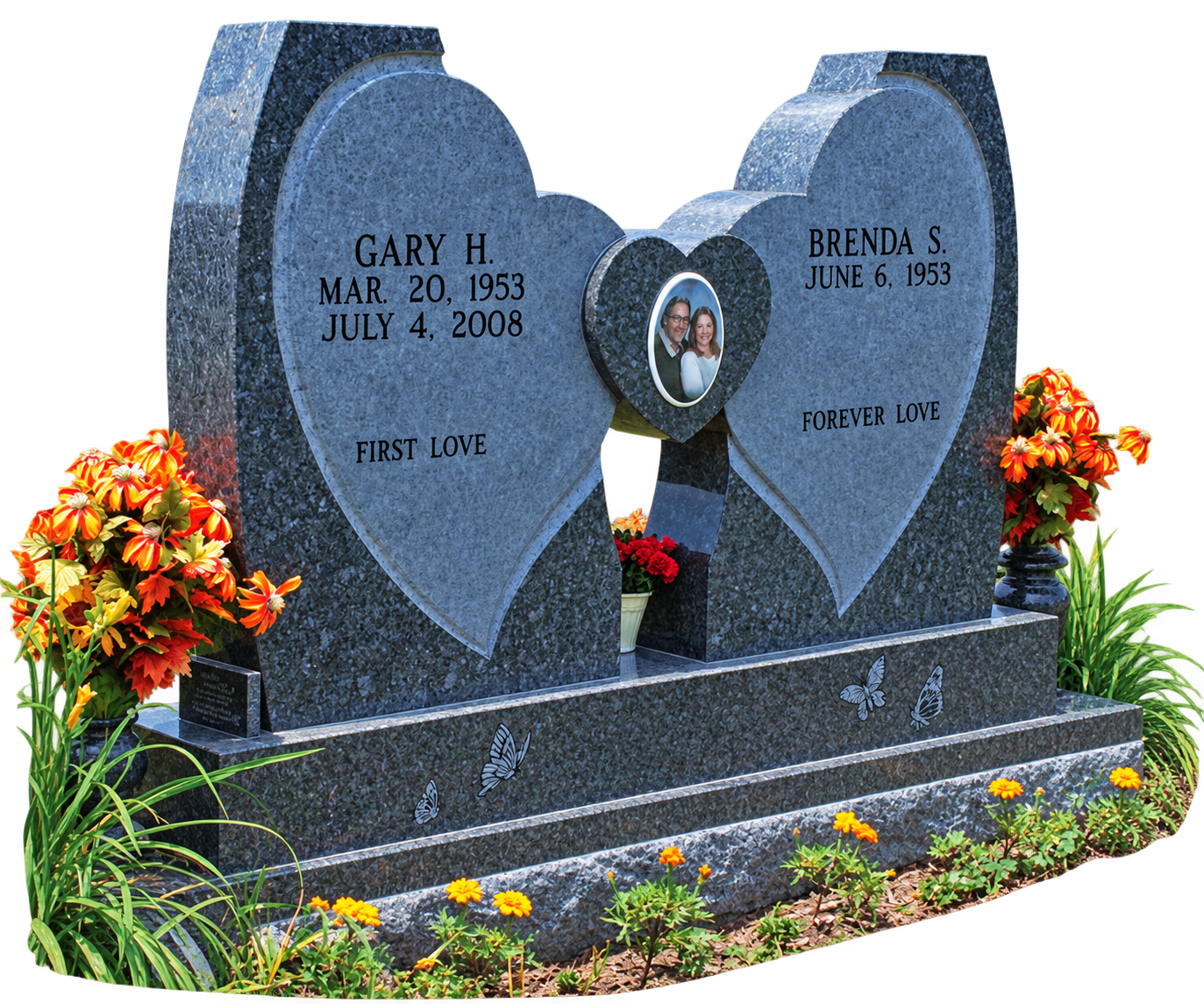
Below is an example of two companion monument designs. The design on the left is shown on Salisbury Pink (Domestic) with rock pitched sides on the die and a rock pitched base. The design on the right is shown on Blue Pearl (Norway) with a stacked polished sub base with engraved butterflies, black Lithichrome, with a rock pitched base below.
Lettering Panel or No Panel?
A lettering panel is a defined area on the face of a monument used to display names, dates, or other inscriptions. Panels can be outlined, recessed, raised, or created by changing the finish of the granite.
As an example, a polished granite monument may include a lighter, frosted rectangular or oval panel that provides contrast behind the lettering. Other families prefer to have lettering engraved directly onto the polished stone without a surrounding panel.
Neither option is necessarily better. The right choice depends heavily on the granite color, engraving technique, and overall appearance you're hoping to achieve.
Panels can also incorporate decorative borders, floral details, or other artwork.
Content and Inscription: “The Story”
One of the most meaningful decisions is determining what you'd like the monument to say, or as we say, “The story you’d like to tell”. The most common inscriptions include:
Full name or family surname
Dates of birth and passing
Family relationships, such as Beloved Mother, Father, Son, or Daughter
Short memorial messages or epitaphs
Scripture, lyrics, poetry, or meaningful quotations
Wedding dates or other significant milestones
Some families prefer a simple inscription containing only a name and dates. Others choose to include a personal message or meaningful verse. Inscriptions may be placed on the front, back, or occasionally the sides and base of a monument, depending on the design.
We will also need to consider spacing and future additions. For companion monuments, leaving room for a future date inscription is often part of the original design.
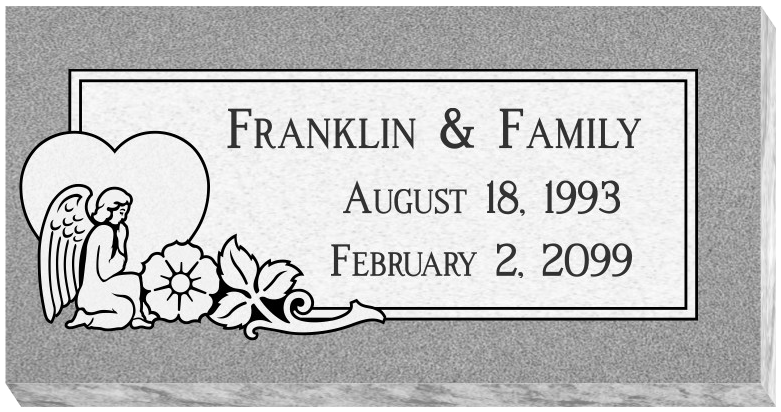
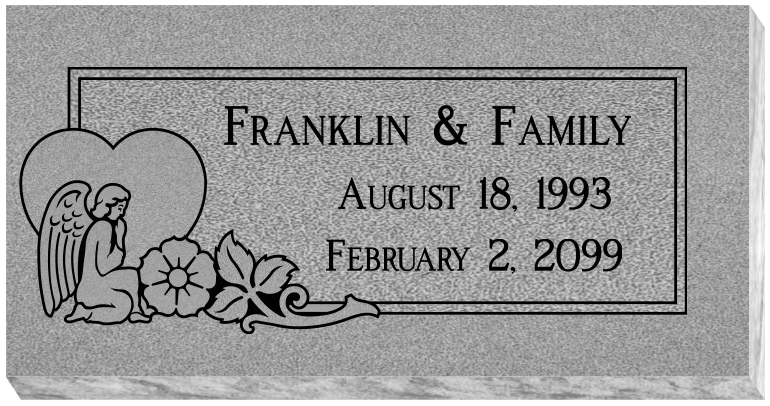
Below is an example of a 24×12×4 Flat Marker design; shown on Georgia Blue stone. The design on the left reflects what we often refer to as a frosted panel. The surface of the stone is lightly sandblasted to add contrast to the lettering, the face is matte and this slightly lightens the panel area. The design shown on the right reflects a polished panel. The panel remains the same sheen and color as the polished face of the stone, with sunk lettering.
Lettering Style and Engraving
The appearance of the lettering can be just as important as the words themselves.
Families will choose from traditional serif fonts, clean block lettering, script, or other decorative styles. Our most commonly utilized cemetery font is Modified Roman.
There are also different techniques used to engrave lettering into granite.
V-Sunk Lettering: Letters are cut deeply into the stone with a V-shaped profile.
Frosted Outline Lettering: Letters are outlined by engraving while their interiors receive a slightly frosted finish.
Polished Outline Lettering: The letters remain polished while the surrounding area is frosted for contrast.
Shallow or Skin-Cut Lettering: A shallower engraving that removes the surface polish, we often encourage skin-sunk engraving on darker stone.
Each technique creates a different visual effect. Some styles may also require additional coloring or contrast treatments to improve readability, such as Lithichrome.
Artwork, Imagery, and Personalization
Beyond just names and lettering, we have the ability to include a wide variety of artwork and personal details on your monument. We frequently use these to represent someone's personality, beliefs, hobbies, career, family, or the things they cherished most in life.
Common options include:
Sandblasted Artwork: Floral designs, crosses, doves, landscapes, and other images engraved directly into the granite.
Shape Carving: A more dimensional style of stone carving that adds depth and contour to artwork.
Laser Etching: Detailed engraving used to create realistic portraits, photographs, or scenic images. Most commonly used on dark polished granite.
Ceramic or Enameled Photo Insets: Small, permanently mounted photographs in various shapes, sizes, and colors.
Bronze Plaques and Emblems: Decorative bronze additions featuring lettering, portraits, religious symbols, or other personal details.
Sculptural Elements: Carved angels, hearts, crosses, flowers, and other three-dimensional designs.
Personalization doesn't have to be overly elaborate to be meaningful. Sometimes a small flower, symbol, or personal detail tells a story way more effectively than an intricate design.
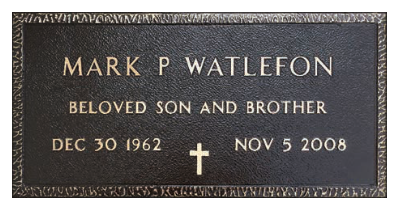
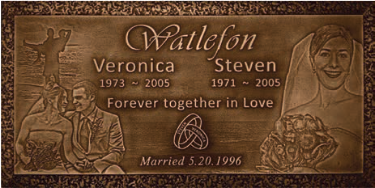
Shown below are two examples of bronze plaques styles. These are frequently required in Memorial Garden style cemeteries, where only flat markers are allowed, and do require a stone granite backer. The image on the left showcases a military bronze plaque, while the image on the right showcases a fully integrated image style plaque. Both feature beveled edges with different design border options.
Flower Vases: Yes or No?
Flower vases are another popular but optional addition to consider.
For upright monuments, vases are often positioned on one or on both ends of the base. Some monument designs also incorporate a vase directly into the stone or bronze plaque itself.
Vases are available in countless styles, including:
Tapered Vases: Typically rectangular or gently tapered designs, usually with polished or rock-pitched surfaces.
Turned Vases: Round, traditionally shaped stone vases with smooth, curved profiles.
Custom Vases: Specially shaped vases designed to complement the monument.
For families who regularly visit the cemetery and bring flowers, a vase can be both a practical and meaningful addition. Optional metal liners may also be added to certain granite vases.
Color Treatments and Finishing Details
The final design decision involves whether to add color or contrast enhancements to the lettering and artwork. As a note, many cemeteries heavily restrict the use of color.
The most commonly used color treatment is called Lithochrome, sometimes referred to as litho or highlighting. Lithochrome is a specialized colorant applied to engraved lettering or artwork to improve contrast. For example, dark lettering may be used against lighter granite, or lighter highlighting may enhance engraving on polished black granite.
We can also add color to certain etched images through hand painting.
It's important to understand that while colorants last quite awhile, these treatments are not permanent. Over time, exposure to sunlight and weather can cause Lithichrome to fade or wear, which is why some cemeteries restrict its use.
We encourage families to consider both the initial appearance and any long-term maintenance of these finishing options.
Finalizing Your Design Together
With so many options, it can easily feel that every detail needs to be decided immediately.
In reality, designing a monument is a process, and we’re here to walk through the process together with you. Some families begin with a specific stone color or monument shape in mind. Others begin with a photograph, a favorite saying, or simply an idea of how they want their loved one to be remembered.
The goal isn't to incorporate every available option. It's to create something that feels right for the loved one being honored and for the family remembering them.
At Franklin & Family Memorial Company, we work with families throughout the Greater Memphis area and beyond to create memorials that are personal, meaningful, and quality built to last. Whether you're considering a simple flat marker, a traditional upright headstone, or a fully custom monument, we're happy to help you explore your options and bring your vision to life.
Zachary Ty Sonnier
-Owner, Husband & Father